How to Start a Drone Business
The Complete Guide
Everything you need to launch a profitable drone business from scratch. From FAA certification to landing your first $10,000 client - this is the only guide you will ever need.
Table of Contents
Is a Drone Business Right for You?
Before diving into the logistics of starting a drone business, you need to honestly assess whether this path aligns with your skills, interests, and financial situation. A drone business can be incredibly rewarding - both financially and personally - but it is not for everyone.
The Reality of Running a Drone Business
Let us be clear from the start: running a successful drone business requires more than just flying drones. Many aspiring drone entrepreneurs make the mistake of thinking their flying skills alone will carry them to success. The truth? Flying is only about 20% of what you will actually do.
The other 80% involves sales, marketing, client communication, editing, equipment maintenance, business administration, and continuous learning. If you are not prepared to wear multiple hats, especially in the beginning, this might not be the right venture for you.
Key Insight
The most successful drone business owners are not necessarily the best pilots - they are the best at solving problems for their clients. Your drone is just a tool to deliver solutions.
Self-Assessment: Are You a Good Fit?
Answer these questions honestly:
Green Flags - You Are Ready If...
- You enjoy learning new technologies
- You are comfortable with sales and marketing
- You have 3-6 months of savings as runway
- You can handle irregular income initially
- You are detail-oriented and safety-conscious
- You enjoy working independently
- You have basic photo/video editing skills (or willing to learn)
- You are comfortable networking and pitching
Red Flags - Reconsider If...
- You only want to fly, not run a business
- You need immediate, stable income
- You dislike talking to people or selling
- You expect to get rich quickly
- You are unwilling to invest in equipment
- You hate paperwork and administration
- You are not comfortable with heights/outdoor work
- You give up easily when things get tough
Income Potential: What Can You Really Make?
Let us talk numbers - real numbers, not the exaggerated claims you see on social media. Your income potential depends heavily on your niche, location, skills, and how much time you dedicate to the business.
| Business Stage | Timeline | Monthly Revenue | Jobs/Month |
|---|---|---|---|
| Startup Phase | Months 1-3 | $0 - $2,000 | 0-4 jobs |
| Building Momentum | Months 4-6 | $2,000 - $5,000 | 4-10 jobs |
| Established | Months 7-12 | $5,000 - $10,000 | 10-20 jobs |
| Scaling | Year 2+ | $10,000 - $25,000+ | 15-30 jobs |
These numbers assume you are treating this as a full-time endeavor. Part-time drone business owners typically see 30-50% of these figures but can still build a meaningful side income of $1,500-$4,000 per month while keeping their day job.
Startup Costs: What You Will Need to Invest
One of the most common questions is how much money you need to get started. Here is a realistic breakdown for different budget levels:
- DJI Mini 4 Pro ($760)
- Part 107 study + test ($175)
- Basic insurance ($500/yr)
- Accessories & batteries ($400)
- Basic editing software ($200)
Good for: Real estate photos, basic video
- DJI Mavic 3 Pro ($2,200)
- Part 107 prep course ($97-$250)
- Comprehensive insurance ($1,000/yr)
- Spare batteries, filters, case ($800)
- Adobe Creative Suite ($660/yr)
- Website & marketing ($500)
Good for: Most commercial services
- DJI Inspire 3 or Matrice ($5,000-$16,000)
- Thermal camera ($3,000-$6,000)
- Premium insurance ($2,000+/yr)
- Mapping software licenses ($2,000+/yr)
- Professional workstation ($2,000)
Good for: Inspections, mapping, cinema
Pro Tip: Start Lean, Scale Up
You do not need the most expensive equipment to start making money. Many successful drone business owners started with a DJI Mini and upgraded their gear from their profits. Focus on landing clients first, then reinvest in better equipment as you grow.
The Drone Industry Landscape 2025
The commercial drone industry is experiencing explosive growth, and 2025 represents a pivotal year for new entrants. Understanding the current landscape will help you position your business for maximum success.
Market Size and Growth Projections
The global commercial drone market is projected to reach $58.4 billion by 2028, growing at a CAGR of 13.9%. In the United States alone, there are over 870,000 registered drones and 350,000+ FAA Part 107 certified pilots.
Top Industries Hiring Drone Pilots in 2025
Not all industries offer equal opportunity. Here are the sectors with the highest demand for drone services, ranked by growth potential and accessibility for new operators:
Real Estate & Property
Photos, videos, virtual tours for listings. Low barrier to entry but competitive.
Construction & Infrastructure
Progress monitoring, site surveys, 3D mapping. Higher value contracts.
Inspections (Roof/Solar/Tower)
Safer and faster than traditional methods. Growing insurance partnerships.
Mapping & Surveying
Requires specialized software skills. High-value enterprise contracts.
Events & Weddings
Seasonal but premium pricing. Requires strong video skills.
Agriculture
Crop monitoring, spraying. Requires specialized equipment.
Regulatory Changes to Watch
The FAA continues to evolve drone regulations. Key changes affecting drone businesses in 2025 include:
- Remote ID Requirement: All drones must broadcast identification. Most new drones are compliant, but older models may need retrofit modules.
- BVLOS Operations: Beyond Visual Line of Sight operations are becoming more accessible through waivers and new rule proposals.
- Operations Over People: Category 1-4 classifications allow more flexibility for flying over crowds and moving vehicles.
- Night Operations: Now standard with Part 107, but anti-collision lighting is mandatory.
The Opportunity Window
Despite the growing number of licensed pilots, only 15-20% are actively operating businesses. Most get their license and never take action. This creates a significant opportunity for those who actually execute.
The businesses that establish themselves now, build their reputation, and develop client relationships will have a major competitive advantage as the industry matures.
Getting Your FAA Part 107 License
The FAA Part 107 Remote Pilot Certificate is your ticket to operating drones commercially in the United States. Without it, you cannot legally charge for drone services. Here is everything you need to know to pass the exam on your first attempt.
What is Part 107?
Part 107 refers to Title 14 of the Code of Federal Regulations (14 CFR Part 107), which governs small unmanned aircraft systems (sUAS) operations. To fly commercially, you must pass a knowledge test and obtain a Remote Pilot Certificate from the FAA.
Exam Requirements
Eligibility Requirements
- Be at least 16 years old
- Be able to read, speak, write, and understand English
- Be in a physical and mental condition to safely operate a drone
- Pass the FAA Aeronautical Knowledge Test
Exam Details
- Questions:60 multiple choice
- Passing Score:70% (42 correct)
- Time Limit:2 hours
- Test Fee:$175
- Certificate Valid:24 months (then recurrent)
What the Exam Covers
The Part 107 exam tests your knowledge across several key areas. Here is the breakdown by topic weight:
Study Timeline
Most people can prepare for the Part 107 exam in 2-4 weeks of dedicated study. Here is a recommended study plan:
Foundations
- Regulations overview
- Basic airspace classes
- Drone registration requirements
- Remote ID basics
Technical Knowledge
- Weather theory
- Loading and performance
- Emergency procedures
- Maintenance and preflight
Charts & Airspace
- Sectional chart reading
- Airspace authorization (LAANC)
- NOTAMs and TFRs
- Airport operations
Review & Practice
- Full practice exams
- Weak area review
- Test-taking strategies
- Schedule your exam
Pass Your Part 107 Exam Faster
Our Part 107 study program includes video lessons, memory tricks, practice exams, and a pass guarantee. Most students pass on their first attempt in just 2 weeks.
Learn About Our Part 107 ProgramChoosing Your Drone Business Niche
One of the biggest mistakes new drone entrepreneurs make is trying to be everything to everyone. The most successful drone businesses specialize in 1-2 niches and become the go-to expert in their area.
Why Niching Down Matters
When you specialize, several powerful things happen:
- Higher Prices: Specialists command premium rates because they deliver better results
- Easier Marketing: You can target specific industries with tailored messaging
- Faster Expertise: You develop deep knowledge and efficiency in your niche
- Better Referrals: Clients know exactly who to recommend you to
- Less Competition: Fewer generalists compete at the specialist level
The Generalist Trap
"I do drone photography for anyone who needs it"
- Competes on price (race to bottom)
- Generic portfolio that does not impress
- Marketing message reaches no one
- Average results: $150-$300/job
The Specialist Advantage
"I create cinematic property tours for luxury real estate agents"
- Commands premium pricing
- Portfolio speaks directly to ideal clients
- Marketing is laser-focused
- Average results: $500-$1,500/job
The 7 Most Profitable Drone Niches in 2025
1. Real Estate Photography & Video
The most accessible entry point for new drone pilots
Real estate drone photography is the most common entry point because there is consistent demand, relatively simple deliverables, and agents are already budgeting for marketing. The challenge is standing out in a crowded market.
Pro Strategy: Instead of competing on price, focus on a sub-niche like luxury properties ($1M+), commercial real estate, or property management companies who need regular content.
2. Roof & Property Inspections
Growing demand from insurance and roofing industries
Insurance adjusters and roofing companies are increasingly using drones for safer, faster inspections. This niche offers excellent recurring revenue potential through partnerships.
Pro Strategy: Partner with 3-5 roofing companies and become their exclusive drone pilot. Offer volume discounts for guaranteed monthly work.
3. Construction Progress Monitoring
High-value recurring contracts with builders
Construction companies use drone imagery for progress documentation, stakeholder updates, safety monitoring, and marketing. A single project can mean 6-18 months of recurring visits.
Pro Strategy: Create a monthly retainer package ($1,500-$3,000/month) for weekly site visits. One or two construction clients can provide stable base income.
4. Mapping & Surveying
Technical niche with highest earning potential
Drone mapping and photogrammetry creates 3D models, orthomosaic maps, and precise measurements for engineering, mining, agriculture, and land development. Requires specialized software skills.
Pro Strategy: Partner with surveying firms who need drone data but do not want to invest in equipment and training. You provide the flying, they handle the professional surveying.
5. Events & Weddings
Premium pricing for special occasions
Weddings, corporate events, festivals, and sports events offer premium pricing opportunities. However, you get one chance to capture the moment - no do-overs. Requires excellent flying skills and video editing.
Pro Strategy: Partner with wedding videographers and photographers who want to add drone services without investing in equipment. You handle the aerial work, they handle the rest.
Niche Selection Framework
Choose your niche based on the intersection of three factors:
You will do this daily - make sure you like it
Are businesses actively paying for this?
What existing skills can you leverage?
Essential Equipment & Gear
Your equipment choices will significantly impact your service quality, efficiency, and profitability. Here is a comprehensive breakdown of what you need and what you can skip.
Choosing Your First (or Next) Drone
The drone market moves fast, and what was top-tier last year may be outdated today. Here are our current recommendations for different business purposes:
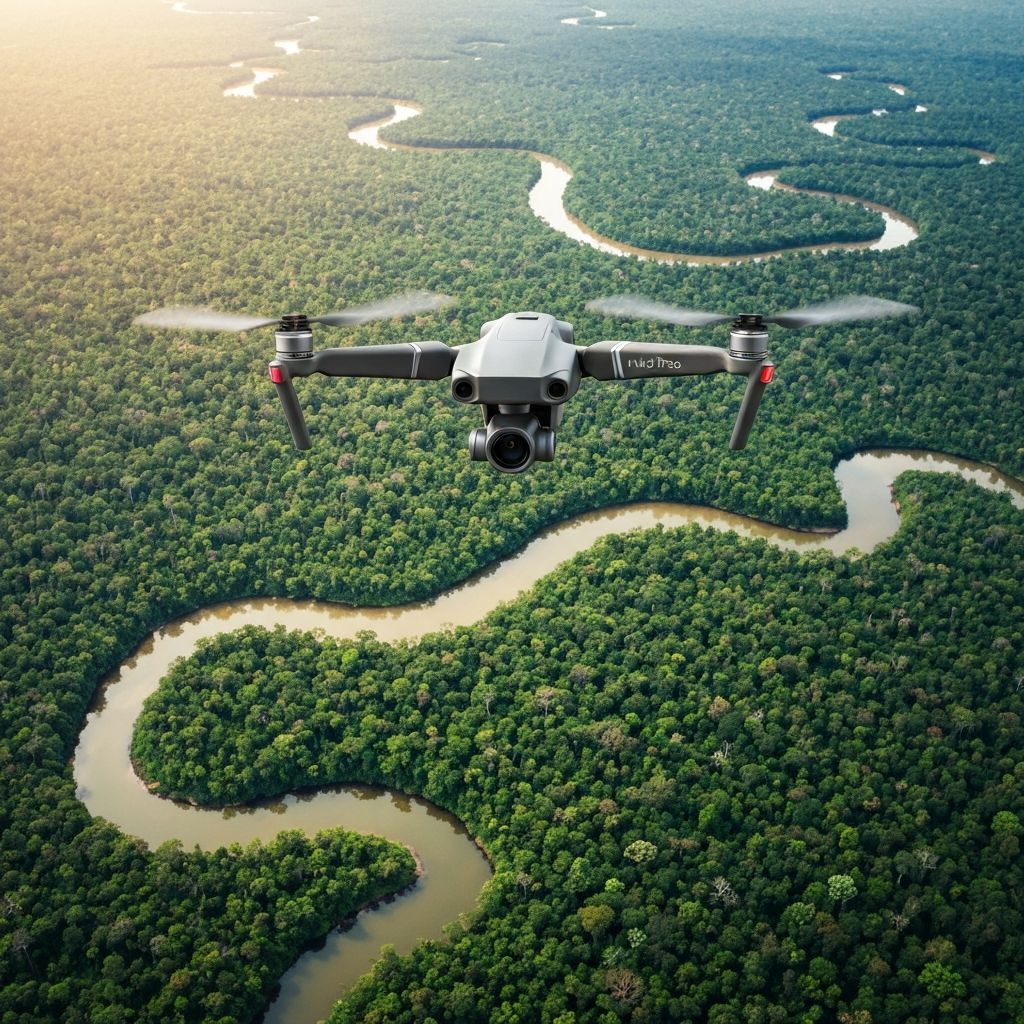
DJI Mavic 3 Pro
The best all-around drone for most commercial applications. Triple camera system with Hasselblad main camera, excellent obstacle avoidance, and 43-minute flight time.
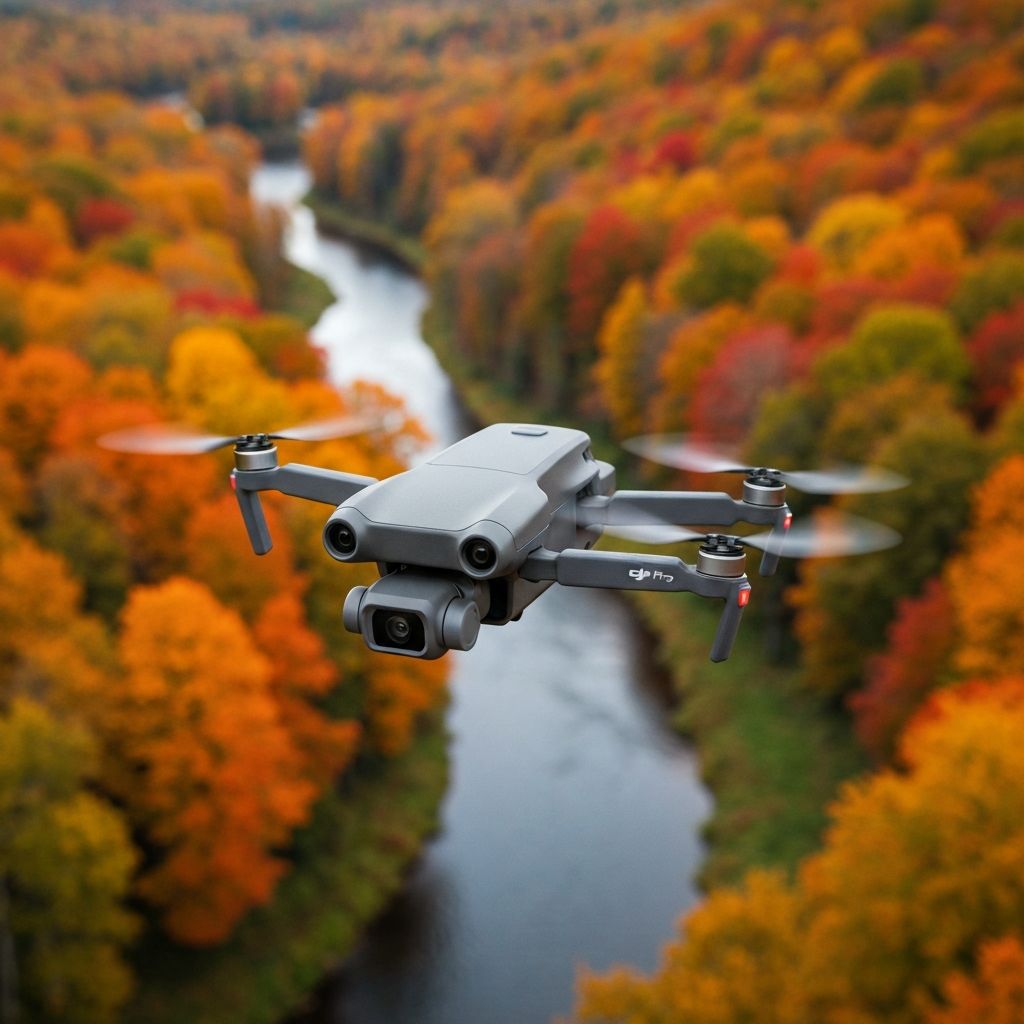
DJI Mini 4 Pro
Under 250g so no Remote ID broadcast module needed. Surprisingly capable for its size with excellent image quality. Perfect for budget-conscious beginners or as a backup.
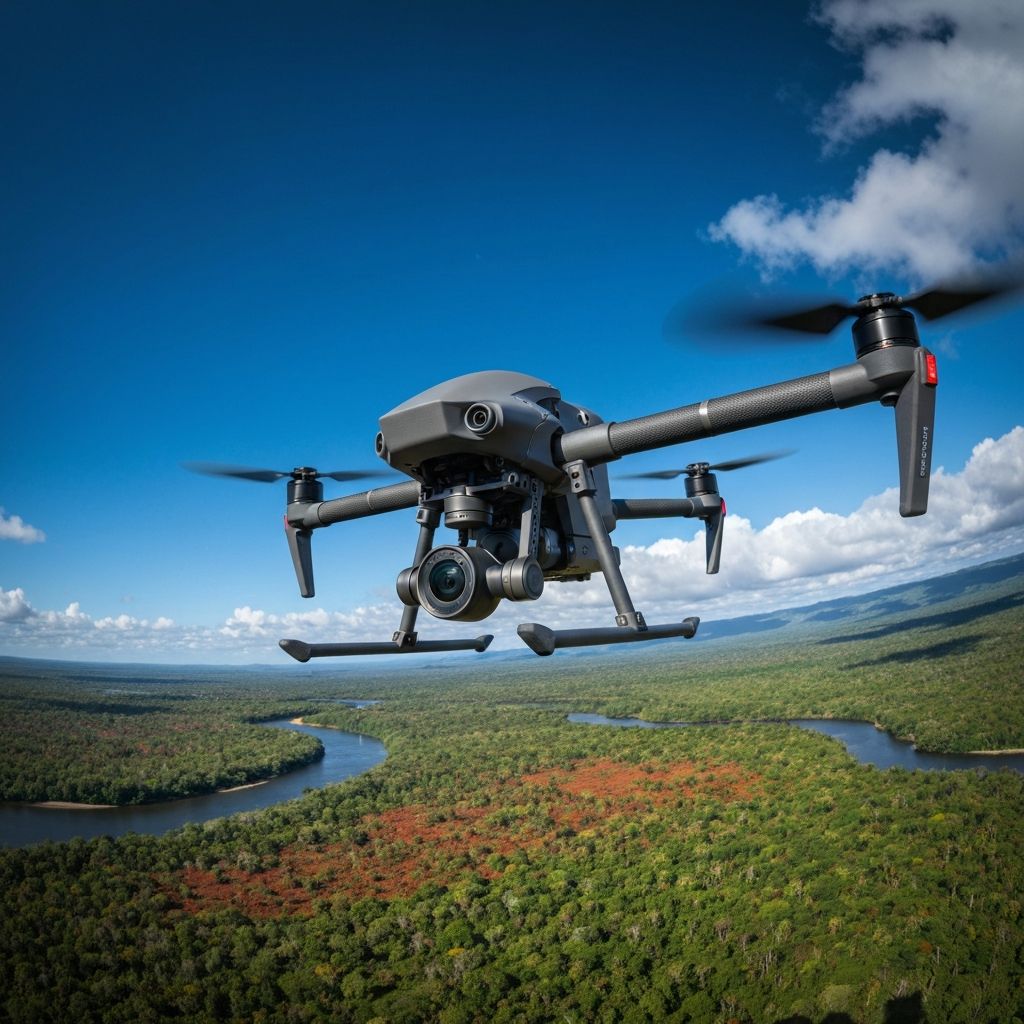
DJI Inspire 3
Cinema-grade aerial platform with full-frame sensor and interchangeable lenses. For professional film production and high-end commercial work.
Essential Accessories
Beyond the drone itself, you will need several accessories to operate professionally:
Must-Have Accessories
- Extra Batteries (3-4 minimum)$150-$200 each
- ND Filter Set$80-$150
- Landing Pad$20-$50
- Carrying Case/Backpack$100-$300
- Memory Cards (multiple)$50-$100
- Tablet/Phone Mount$30-$50
- Sunshade for Controller$15-$30
Nice-to-Have Gear
- Portable Battery Charger$150-$400
- Safety Vest$20-$40
- Cones/Safety Markers$30-$50
- Anemometer (wind gauge)$20-$50
- iPad (larger screen)$450-$800
- Backup Controller$200-$500
- Prop Guards$30-$50
Post-Processing Software
Your deliverables are only as good as your editing. Here are the software tools you will need:
Photo Editing
- Adobe Lightroom - Industry standard ($10/mo)
- Capture One - Pro alternative ($15/mo)
- Luminar Neo - AI-powered ($149 one-time)
Video Editing
- Adobe Premiere Pro - Industry standard ($23/mo)
- DaVinci Resolve - Powerful free option
- Final Cut Pro - Mac only ($299 one-time)
Mapping/Surveying
- DroneDeploy - Easy to use ($329/mo)
- Pix4D - Professional ($350/mo)
- WebODM - Open source (free)
Legal Structure & Business Setup
Setting up your business properly from the start protects you legally and positions you for growth. Here is what you need to know about structuring your drone business.
Business Structure Options
| Structure | Liability Protection | Tax Treatment | Complexity | Best For |
|---|---|---|---|---|
| Sole Proprietorship | None | Personal return | Very Easy | Testing the waters |
| LLC | Strong | Flexible (pass-through) | Moderate | Most drone businesses |
| S-Corp | Strong | Self-employment savings | Complex | $75K+ annual profit |
Our Recommendation: Start with an LLC
For most drone business owners, a single-member LLC offers the best balance of liability protection, tax flexibility, and simplicity. You can always convert to an S-Corp later when your profits justify the additional complexity. Formation costs range from $50-$500 depending on your state.
Business Setup Checklist
Insurance Requirements
Insurance is not optional for professional drone operations. Many clients require proof of insurance before hiring you, and a single accident could bankrupt an uninsured operator.
Types of Insurance You Need
Drone Liability Insurance
Covers damage or injury caused by your drone to third parties. Most clients require $1M coverage minimum.
Hull/Equipment Coverage
Covers damage to your own drone and equipment from crashes, theft, or accidents.
General Liability
Covers non-drone related business liability (slip and fall at a site, etc.).
Errors & Omissions
Covers claims of professional negligence or failure to deliver promised services.
Top Drone Insurance Providers
SkyWatch
Verifly
BWI Fly
Pricing Your Services
Pricing is where most new drone pilots struggle. Price too low and you will burn out working for pennies. Price too high without the portfolio to back it up and you will not get hired. Here is how to find the sweet spot.
Pricing Models
Per Project
Fixed price for defined deliverables. Best for real estate, events, and one-time jobs.
Hourly Rate
Best for variable-scope work like inspections or when editing time is unpredictable.
Day Rate
Best for large projects, film production, or multi-day construction monitoring.
Market Rate Reference Guide
| Service Type | Budget Range | Mid Range | Premium |
|---|---|---|---|
| Real Estate Photos | $100-$200 | $200-$350 | $350-$600 |
| Real Estate Video | $200-$350 | $350-$600 | $600-$1,200 |
| Roof Inspection | $150-$250 | $250-$400 | $400-$800 |
| Construction Progress | $300-$500 | $500-$1,000 | $1,000-$2,000 |
| Wedding/Event | $300-$500 | $500-$1,000 | $1,000-$2,500 |
| Mapping (per acre) | $15-$25 | $25-$50 | $50-$100+ |
Do Not Race to the Bottom
New pilots often underprice to get their first clients. This is a mistake. Low prices attract price-sensitive clients who are harder to work with and rarely refer others. Start at market rate and compete on quality and service instead.
Marketing & Finding Clients
You can be the best pilot in the world, but without clients, you do not have a business. This chapter covers the most effective strategies for finding and winning drone clients in 2025.
The Client Acquisition Hierarchy
Not all lead sources are created equal. Here is where to focus your energy for maximum ROI:
Tier 1 - Highest ROI
80% of your clients should come from here
Tier 2 - Strong ROI
Build these for passive lead generation
Tier 3 - Moderate ROI
Support activities, not primary focus
Tier 4 - Low ROI
Avoid or minimize time spent here
Direct Outreach That Works
Cold outreach has a bad reputation because most people do it wrong. Here is how to do it right:
Email Template: Real Estate Agent Outreach
Subject: Quick idea for your [NEIGHBORHOOD] listings
Hi [NAME],
I noticed you have some beautiful listings in [NEIGHBORHOOD]. The aerial perspective on properties like [SPECIFIC ADDRESS] could really showcase the lot size and neighborhood appeal.
I am a licensed drone pilot who works with agents in [CITY] to create aerial photos and videos that help properties stand out. My clients typically see [SPECIFIC RESULT - e.g., "40% more listing views"].
Would you be open to a quick call this week to see if aerial media could work for your listings?
Best,
[YOUR NAME]
Building a Referral Engine
Referrals are the lifeblood of a sustainable drone business. Here is how to systematically generate more referrals:
- Deliver exceptional work - This is the foundation. Blow clients away.
- Ask at the right time - Right after delivering work and getting positive feedback.
- Make it easy - Provide specific language they can use to refer you.
- Incentivize - Offer referral bonuses ($50-$100 off their next project).
- Follow up - Thank referrers and keep them updated when referrals convert.
Scaling Your Business
Once you have established steady revenue, you will face a choice: stay as a solo operator or scale into something bigger. Both paths are valid - here is how to think about scaling.
Signs You Are Ready to Scale
- You are consistently turning down work due to capacity
- You have repeatable systems and processes
- Your revenue is predictable month-over-month
- You have cash reserves to invest in growth
- You want to build a company, not just a job
Scaling Strategies
Hire Subcontractors
Bring on other licensed pilots to handle overflow work. You keep a percentage (typically 20-40%) for project management and client relationships.
Hire Employees
Full-time pilots give you more control over quality and availability, but come with significant additional costs and responsibilities.
Productize Your Services
Create fixed-price packages with standardized deliverables. Makes pricing, selling, and delivery more efficient and scalable.
Add Complementary Services
Expand into related services like ground photography, video editing, virtual tours, or 3D scanning to increase revenue per client.
Common Mistakes to Avoid
Learn from the mistakes of others so you do not have to make them yourself. Here are the most common pitfalls that derail new drone businesses.
Underpricing Services
Why it happens: Fear of rejection and lack of confidence leads to racing to the bottom on price.
The fix: Research market rates, start at mid-range pricing, and focus on value over price.
Neglecting Marketing
Why it happens: Pilots get busy with projects and stop prospecting, creating feast-or-famine cycles.
The fix: Dedicate at least 20% of your time to marketing, even when busy.
Skipping Contracts
Why it happens: Verbal agreements seem simpler but leave you exposed to disputes and non-payment.
The fix: Always use written contracts that specify scope, deliverables, payment terms, and usage rights.
Buying Too Much Gear
Why it happens: Shiny object syndrome leads to buying equipment you do not need yet.
The fix: Start minimal and upgrade based on client needs, not wants.
Ignoring Customer Service
Why it happens: Focusing only on technical quality while neglecting the client experience.
The fix: Communication, reliability, and professionalism matter as much as your footage.
Not Specializing
Why it happens: Trying to serve everyone results in serving no one well.
The fix: Pick 1-2 niches and become the go-to expert in your area.
Flying Without Insurance
Why it happens: Thinking 'it won't happen to me' until it does.
The fix: Get liability insurance before your first paid flight. No exceptions.
Poor Time Management
Why it happens: Underestimating travel, setup, editing, and admin time.
The fix: Track your time on jobs and factor all hours into your pricing.
Your 90-Day Launch Plan
Here is a concrete action plan to go from zero to your first paying clients in 90 days. Follow this week by week and you will have a functioning drone business by the end.
Month 1: Foundation
Get legal, get licensed, get equipped
- Start Part 107 study
- Research business structures
- Choose your niche
- Continue Part 107 study
- Form your LLC
- Open business bank account
- Schedule Part 107 exam
- Purchase/order drone
- Get insurance quotes
- Pass Part 107 exam
- Set up accounting
- Create service packages
Month 2: Build & Practice
Build your presence and refine your skills
- Build simple website
- Set up Google Business
- Practice flying daily
- Create social profiles
- Shoot demo content
- Learn editing software
- Build initial portfolio
- Write contracts
- Set up CRM
- Finalize pricing
- Create pitch deck
- Start networking
Month 3: Launch & Sell
Get clients and start making money
- Send 20 outreach emails
- Attend 1 networking event
- Post first content
- Follow up on leads
- Send 20 more emails
- Offer free demo flight
- Close first client
- Deliver excellent work
- Ask for testimonial
- Ask for referrals
- Analyze what worked
- Plan next 90 days
Ready to Start Your Drone Business?
This guide gives you the knowledge - our complete Drone Profit System gives you the shortcuts, templates, and support to execute faster.
Get the complete system with templates, scripts, client-getting strategies, and more.
Get the Drone Profit System30-day money-back guarantee. Instant digital access.
Frequently Asked Questions
How much does it cost to start a drone business?
You can start a basic drone business for $2,500-$4,000 including a drone, Part 107 certification, and basic insurance. A more professional setup runs $6,000-$10,000. The key is starting lean and reinvesting profits into better equipment.
Do I need a Part 107 license to start a drone business?
Yes. The FAA requires all commercial drone operators in the US to hold a Part 107 Remote Pilot Certificate. Flying commercially without this certification is illegal and can result in fines up to $32,666 per violation.
How long does it take to get Part 107 certified?
Most people can prepare for and pass the Part 107 exam in 2-4 weeks of dedicated study. The exam itself takes about 2 hours. After passing, you will receive your certificate within 6-8 weeks (sometimes faster).
What is the most profitable drone service?
Mapping and surveying typically commands the highest rates ($1,000-$10,000+ per project), but requires specialized skills. For beginners, real estate photography offers the best balance of demand, pricing, and accessibility.
How do I find my first drone clients?
The fastest path is direct outreach to businesses in your niche (real estate agents, roofing companies, construction firms). Send personalized emails, attend local networking events, and leverage your personal network for referrals.
Do I need an LLC for my drone business?
While not legally required, an LLC is highly recommended. It protects your personal assets from business liability, looks more professional to clients, and provides tax flexibility. Formation costs range from $50-$500 depending on your state.
How much can I make with a drone business?
Income varies widely based on your niche, location, and effort. Part-time operators typically earn $1,500-$4,000/month. Full-time drone business owners often reach $5,000-$15,000/month within the first year, with top earners exceeding $25,000/month.
What drone should I buy for my business?
For most commercial applications, we recommend the DJI Mavic 3 Pro ($2,199+) for its excellent image quality, flight time, and versatility. Budget-conscious beginners can start with the DJI Mini 4 Pro ($759+).